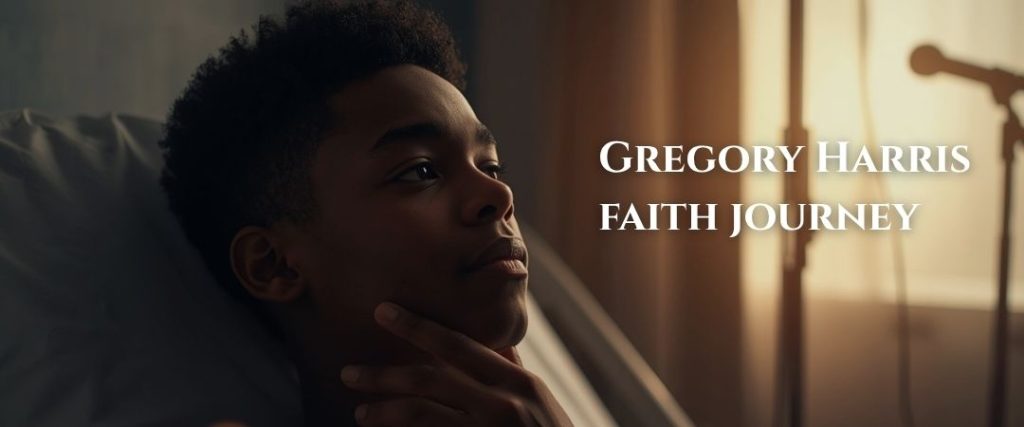
Gregory Harris loved to sing from a young age. He joined school choirs and sang at church, making music a big part of his identity. People saw his talent and sometimes even paid him to perform. Still, he often felt shy and unsure of himself.
When he was fifteen, a problem with his vocal cords put his singing at risk. After singing, his voice would get hoarse, and he often had to see a doctor. His raspy voice drew attention at school, and some students teased him about how he sounded. Even everyday conversations became hard because people sometimes struggled to understand him.
For a teenager who loved music, this was a very personal struggle. He didn’t know what would happen to his voice or if he would ever sing again.
A Health Problem That Affected His Confidence
Dr. Harris’s voice problems didn’t stop at the choir room. He remembers having to repeat himself when ordering food at restaurants because workers couldn’t understand him. These situations made him feel self-conscious.
Young people often remember hurtful comments longer than adults might think. A joke about someone’s voice, looks, or abilities can slowly chip away at their confidence. Dr. Harris saw how quickly other people’s reactions could change how he felt about himself.
His vocal cord problem also made his future feel uncertain. Singing was already a big part of his life, and losing it could take away something that made him happy.
Even so, he kept singing, praying, and going to his doctor visits. His faith grew stronger during this time, even though he didn’t know how things would turn out.
Facing Vocal Cord Surgery at Fifteen
Eventually, doctors said Dr. Harris needed surgery. He hadn’t stayed in a hospital since he was born early, so the whole experience felt new and strange.
His parents were there for him the whole time. They bought him new pajamas and stayed nearby as the doctors got him ready for surgery. He remembers the IV, blood tests, X-rays, hospital gown, and the walk to the operating room.
Seeing other patients waiting under anesthesia scared him. He was wide awake and didn’t really understand what was happening. When the anesthesia finally worked, he had to trust the medical team to take care of him.
After surgery, he woke up feeling confused and started swinging his arms. His mother and a nurse helped calm him down. The hospital staff gave him popsicles, but he soon wanted something more to eat.
The hardest part came after the surgery: Dr. Harris lost his voice for a while.
Prayer Became Part of His Recovery
During recovery, Dr. Harris found himself praying more. He couldn’t control when his voice would return or whether it would sound the same. Prayer helped him share his fears and stay hopeful.
Trusting God while he was sick didn’t mean skipping medical care. The doctors did their part, his parents helped, and recovery took time. Faith helped him handle the uncertainty that came with all those steps.
He started to see faith as something you practice every day. He prayed, waited, and watched for signs of progress. This experience shaped his spiritual life because he had to trust God when he felt most vulnerable.
His voice did come back. For Dr. Harris, getting his voice back meant much more than just being able to speak clearly again.
His Voice Became Part of His Purpose
Dr. Harris kept working on his musical talent. He went on to sing professionally, travel around the country, appear on gospel TV shows, and even perform at a Democratic rally for President Bill Clinton.
In 1994, he started the Little Rock Community Choir. The group recorded music, performed all over the United States, and appeared on the Bobby Jones Gospel Show on BET. The voice that once embarrassed him became a way to inspire others.
Even with his success, he never forgot the fear he felt at fifteen. That memory made him value every chance to sing, lead, and share his faith.
Lessons He Carried Forward
He learned several important lessons from his experience:
- Fear can remain present while a person continues to pray and act.
- Family support can make a frightening recovery feel less lonely.
- Hurtful comments do not decide someone’s future.
- Medical care, patience, and faith can all have a place in recovery.
- A personal struggle can deepen gratitude for a gift once taken for granted.
These lessons later became part of his message in How I Got Off That Tree Limb. Dr. Harris uses the tree limb as a symbol for hesitation, fear, and feeling stuck. His surgery made him face uncertainty early in life, and his recovery gave him the confidence to keep using his voice.
Continuing to Sing With Faith
Dr. Harris could have let embarrassment and fear keep him quiet even after his voice came back. Instead, he kept practicing, performing, and taking the opportunities that came his way.
Losing his voice showed him that faith often grows while you wait. He learned to accept help, listen to doctors, pray regularly, and trust that his life still had meaning. His voice eventually reached audiences he never could have imagined at fifteen. Every time he performed, he remembered being that scared teenager going into surgery and hoping to sing again.